YouTube / Sponsorships & Affiliate · Claim Review
“How I Made 48K Last Month Using Four AI Employees”
What we found: The $48K Month Is 80% Brand Sponsorships, Stated Before the Month Closed, in a Video Sponsored by the Tool It Credits
The creator discloses the sponsorship, the income split and a 21,000-subscriber channel. The revenue figures reconcile; costs, profit and how much of the jump from $20,000 the AI tools caused are not stated in the video.
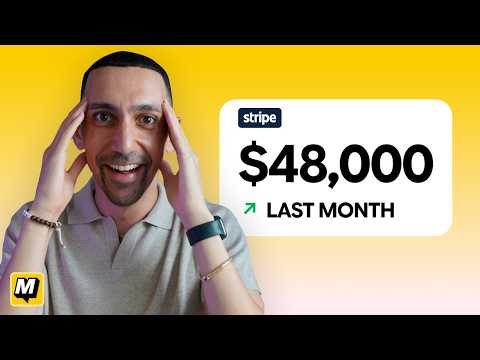
- $48,000 April revenue
- 80% From sponsorships
- $20,000 March revenue
- Not stated Costs and profit
The claim
That a one-person content business made $48,000 in a month, up from $20,000, with four AI assistants as the core infrastructure behind the growth.
- Revenue for April — $48,000, stated on 27 April with the month not over
- Revenue for March — ~$20,000
- Revenue a few months earlier — Under $12,000
- Share from brand sponsorships — 80% (~$38,400)
- Share from affiliate commissions — 16% (~$7,680)
- Remaining 4% (~$1,920) — Source not stated
- Subscribers — ~21,000
- May forecast — "Closer to 60" thousand
- Monthly revenue needed for $1M a year — $84,000
- Editor, publishing help and tool costs — Not stated in the video
What is this income idea?
Run a YouTube channel about software, earn from brand sponsorships and affiliate links, and use AI assistants to repurpose content, write blog posts, find leads and review contracts.
- The creator describes a solo business with no full-time staff: video editors paid per project and one person who helps publish to YouTube. They have about 21,000 subscribers at the time of recording.
- The income figures are stated early. April came to $48,000, March to about $20,000, and a few months before that the business was under $12,000. The creator adds that it is "technically on paper" 27 April, so the month is not over yet.
- They break the $48,000 down. 80% comes from sponsorships, described as many small relationships rather than one or two large sponsors; 16% comes from affiliate commissions. They stress that they sell no course or paid community.
- The video is also part two of a series about a sponsoring AI platform, and the creator states near the start that they have partnered with it for this video, with a discount link and promo code in the description.
- Four of the platform's assistants are then walked through: one that drafts social posts from each video, one that writes SEO blog posts with affiliate links embedded, one that finds and emails outbound leads from a database of 700 million contacts, and one that reviews brand contracts against the creator's own rules.
- The video closes with a forecast of about $60,000 for May and a target of $84,000 a month to reach $1 million a year.
Brands pay a small but focused tech channel to cover their software, and AI tools help the creator respond and publish faster.
- Publish a video — Editors per project
- Repurpose to social — AI drafts posts
- Turn it into a blog post — Affiliate links added
- Brands find the creator — Plus AI outbound
- Review the contract — AI checks clauses
- Get paid — 80% sponsorship, 16% affiliate
The revenue comes from brands. The AI tools sit around the process of winning and delivering that work.
A sponsorship business, described inside a sponsorship
The lesson underneath the number
- The creator deserves credit for the disclosures. They give the split between sponsorship and affiliate income, the subscriber count, the previous months, and the fact that this video is sponsored, all within the first few minutes. They say they sell no course or community, and they add an honest caution that the contract tool does not replace a lawyer.
- What those disclosures reveal is the shape of the business. About $38,400 of the $48,000 came from brands paying for content, on a channel of about 21,000 subscribers. That is a strong rate for a channel that size, and the video says it comes from many small relationships rather than a few large ones. It is a sponsorship business first.
- The video then credits a set of AI assistants for the growth, while being one of the sponsorships. The assistants plausibly help: faster replies and contract turnaround, more posts per video, blog content carrying affiliate links. But the video gives no figure for what any of them contributed. The step from $20,000 to $48,000 could reflect the tools, the channel's growth, the timing of a few deals, or all three.
- For a viewer the useful takeaway is the business model, not the tools. A focused software channel with an engaged audience can earn mostly from sponsors, and responsiveness to brands matters. Whether a particular AI subscription delivers that responsiveness is a separate question that this video, as a paid placement, does not test.
$48,000 isn't the goal. It's proof the model is working.
The creator, early in the video
The four assistants, as the creator describes them
What each one is said to do in the creator's business.
No figure is given for what any assistant added to revenue or saved in cost.
- Social media repurposing — Sends daily post ideas, drafts the chosen one, generates images and can schedule posts on autopilot. The creator says an agency working for a large tech company contacted them that day after seeing a short-form clip.
- Blog posts with affiliate links — Writes an SEO article for each video, embeds the affiliate link and adds internal links. The creator's site is on Framer, so they paste the content in by hand.
- Outbound lead generation — Connected to a database of 700 million leads, it emails prospects daily, follows up and flags replies. No reply, meeting or deal figures are given.
- Contract review — Checks brand contracts against clauses the creator specifies. The creator says their own agreement is drafted by lawyers and that the tool does not replace one for major deals.
- Speed as the lever — The creator's case is that faster replies, contracts and revisions win and deliver more sponsorships. They link this directly to going from $20,000 in March to $48,000 in April.
The business model
Brand sponsorships (80%) and affiliate commissions (16%) from a YouTube channel and blog about software.
Software brands buying sponsored videos, and viewers who sign up through affiliate links.
Educational coverage of software tools for an audience the creator describes as small but engaged.
YouTube, repurposed social posts, SEO blog posts and AI-assisted outbound email to prospective sponsors.
- Video editors — Paid per project; amounts not stated
- Publishing help — One person; cost not stated
- AI platform subscription — Not stated in this video
- Legal drafting — Lawyers drafted the brand agreement; fee not stated
- Website — Framer; cost not stated
Every cost is named or implied and none is priced, so the $48,000 cannot be turned into a profit figure.
What you would actually need
Money
Video editors are paid per project and one person helps publish. The cost of the AI platform is described in the earlier video in the series; no cost figure is stated in this one.
The $48,000 is revenue. Editor fees, publishing help, software and tax are not stated, so profit cannot be worked out from the video.
Costs named but not priced
- Video editors, paid per project
- A person who helps publish to YouTube
- The AI platform subscription
- Lawyers who drafted the creator's brand agreement
- Website hosting on Framer
- Income tax
Time
"Yes I do work a lot but I love it." The assistants are presented as buying back time rather than replacing work.
The core asset is a channel of about 21,000 subscribers that brands want to sponsor. How long it took to build, and how many videos a month the sponsorships require, are not stated in the video.
Where the time goes
- Scripting and recording sponsored videos
- Replying to brands and negotiating contracts
- Reviewing and approving AI drafts and leads
- Managing editors
- Building the channel to 21,000 subscribers: time not stated
The part you must pay attention to
The revenue comes from brands paying for videos like this one.
The creator is clear that 80% of the $48,000 is sponsorship income, and that this video is sponsored by the platform it credits for the growth.
- Stated April revenue — $48,000
- Share from sponsorships — 80%
~$38,400
Sponsorship revenue in April
The load-bearing assumption is that the assistants caused the jump from $20,000 to $48,000. The creator draws that link directly ("it's probably starting to make sense to you of how we went from 20,000 in March to $48,000 in April"), but no figure in the video connects any tool to any deal: no leads converted, no sponsorships won through outbound, no hours saved. The income is mainly from brands paying for coverage, and the video describing the tools is one of those paid placements. A viewer cannot tell from the video how much of the increase came from the tools and how much from the sponsorship market, the channel's growth or the timing of deals.
The arithmetic that is given holds up. 80% plus 16% leaves 4%, about $1,920, whose source is not stated. $84,000 a month for 12 months is $1,008,000, so the $1 million target checks out, although it is 1.75 times April rather than double it. April was also stated on the 27th, so the $48,000 is a figure for a month in progress, and the title's "last month" describes a month that had not closed when it was recorded.
- THE APRIL SPLIT (our maths)
- Revenue $48,000
- Sponsorships 80% = $38,400
- Affiliate 16% = $7,680
- Other 4% = $1,920
- THE TREND
- A few months ago < $12,000
- March $20,000
- April (to 27th) $48,000
- May forecast ~$60,000
- THE TARGET
- $84,000 x 12 = $1,008,000
- $48,000 x 12 = $576,000
- $84,000 / $48,000 = 1.75x
- COSTS not stated
The economics
Revenue is stated and broken down. Costs and profit are not.
- April revenue (to 27 April) — $48,000
- March revenue — ~$20,000
- Revenue a few months earlier — Under $12,000
- Sponsorship share — 80% (~$38,400)
- Affiliate share — 16% (~$7,680)
- Unexplained share — 4% (~$1,920)
- Subscribers — ~21,000
- May forecast — ~$60,000
- Costs of any kind — Not stated in the video
Checking the $1 million target
$84,000 × 12 = $1,008,000; $48,000 × 12 = $576,000
The $84,000-a-month target does reach $1 million a year; it is 1.75 times April, not double
IncomeIdeaLab calculation from the figures stated in the video
All figures are revenue. With editors, publishing help, software and legal costs unstated, no profit or margin can be derived.
- Editor and publishing costs
- The AI platform's price, in this video
- Whether April's final figure differed from $48,000
- The source of the remaining 4%
- Any lead, reply or deal figure from the outbound assistant
- Any traffic or affiliate figure from the AI-written blog posts
- Profit
- Sponsorship revenue of about $38,400 on 21,000 subscribers is about $1.83 per subscriber for the month, our arithmetic. The video gives no views figure, so a rate per view cannot be calculated.
- The contract tool statistics, 92% of users feeling more confident and 85% reporting fewer misunderstandings, are the vendor's own survey figures as read out by the creator. No source or sample size is stated.
- The 700 million lead database is a vendor feature, not a result. The video gives no figure for how many sponsorships, if any, came from outbound email.
- The creator frames affiliate income as "my version of passive income". At 16%, it was about $7,680 in April.
Evidence status
Every substantive figure in the video.
- $48,000 last month — Creator — Stated on 27 April with the month not over; revenue, not profit.
- ~$20,000 in March — Creator — We could not check this from the video.
- Under $12,000 a few months earlier — Creator — Exact month not stated.
- 80% sponsorships, 16% affiliate — Creator — About $38,400 and $7,680. 4% unaccounted for.
- About 21,000 subscribers — Creator — Context for a sponsorship-led business.
- The AI assistants drove the growth — Creator, in a sponsored video — No figure links any tool to any deal.
- 700 million lead database — Vendor feature, read by creator — A product feature, not a result.
- 92% more confident, 85% fewer misunderstandings — Vendor statistics — Source and sample not stated.
- ~$60,000 in May — Creator — A forecast.
- $84,000 a month = $1M a year — Creator — Checks out: $1,008,000.
- Costs and profit — Nobody — Not stated in the video.
What is actually proven?
The revenue split is disclosed. The tools' effect is not measured.
- The sponsorship of this video and the affiliate discount are disclosed by the creator.
- 80% of April revenue came from sponsorships and 16% from affiliate commissions.
- The $84,000-a-month target reaches $1,008,000 a year.
- 4% of revenue, about $1,920, has no stated source.
- How much of the rise from $20,000 to $48,000 the AI tools caused.
- Costs, and therefore profit.
What the headline doesn’t tell you
The title credits AI employees. The income split points to sponsors.
- 80% is sponsorships. — About $38,400.
- This video is sponsored. — By the platform it features.
- The month was not over. — Stated on 27 April.
- It is revenue. — No costs are stated.
- There are editors. — Paid per project, plus publishing help.
- No tool results are given. — No leads, deals or hours saved.
- The vendor stats are the vendor's. — 92% and 85%, unsourced.
Should you try it?
The model, maybe. The tools are a separate decision.
A sponsorship-led software channel is a real model. This video does not show whether the AI subscription it promotes changes the outcome.
- Disclosure of sponsorship — 9 — Stated early, with the affiliate discount.
- Revenue breakdown — 7 — Split by source; 4% unexplained.
- Arithmetic consistency — 8 — Split and $1M target both check out.
- Evidence the tools caused the growth — 1 — No figure links any tool to any deal.
- Cost disclosure — 1 — Editors and tools named, none priced.
- Beginner accessibility — 3 — Needs an audience brands will pay to reach.
- The business underneath this video is a software review channel that brands pay to appear on. With about 21,000 subscribers, the creator reports roughly $38,400 in sponsorship revenue in April. That is the asset that makes the income possible, and it took time to build that the video does not state.
- The AI assistants are the subject of the sponsorship. They may well save time on posts, blogs, outreach and contracts, but the video gives no numbers for any of it. If you are starting from zero, the tools will not produce sponsors on their own; an audience brands want to reach does.
- If you already run a channel with inbound brand interest, the practical lesson is speed: the creator's point that fast replies, contracts and revisions win more deals is plausible and costs nothing to test. Try it before paying for software to do it.
Passive or automated?
Automation
Drafting and outreach are assisted; every sponsored video is still made by people.
Passive potential
Sponsorship income stops when the videos do.
Most of this revenue is paid per sponsored video, so it is active work by definition: the creator scripts and records, editors cut, and someone publishes. The assistants draft posts, blogs and outreach emails, but the creator says they review and approve them. Affiliate commissions are the only part the creator calls passive, and they were 16% of April.
- Scripting and presenting each sponsored video
- Video editors, paid per project
- Publishing to YouTube
- Approving AI-drafted posts and leads
- Negotiating brand contracts
Recommended beginner experiment
Build the audience before the stack.
- Pick a narrow software niche. — Brands sponsor focused audiences.
- Publish consistently for months. — The asset behind the 80%.
- Add affiliate links you actually use. — 16% of the creator's revenue.
- Reply to brands within hours. — The creator's main lever.
- Track every cost from the start. — Editors, tools, legal.
- Test any AI tool against a metric. — Leads, deals or hours saved.
Our verdict: 5/10
A well-disclosed revenue split that points to sponsors, not tools with no costs stated and no figure tying the AI assistants to the growth
Credited for disclosing the sponsorship and affiliate discount early, for giving the income split by source, the subscriber count and previous months, for arithmetic that checks out on the $1 million target, and for a clear caution that the contract tool does not replace a lawyer. Marked down because the $48,000 was stated before the month closed, because 80% of it is sponsorship income in a video that is itself a sponsorship of the tools credited for the growth, because no figure links any tool to any revenue, and because no costs are stated.
The creator is more open than most about where the money comes from. Of the $48,000 reported for April, 80% is brand sponsorships and 16% affiliate commissions, on a channel of about 21,000 subscribers, up from about $20,000 in March and under $12,000 a few months before. They disclose that this video is sponsored by the AI platform it describes and promote a discount link for it. The figures they give are consistent: the split leaves about $1,920 unexplained, and $84,000 a month does reach $1 million a year. Three things limit what a viewer can take from it. The $48,000 was stated on 27 April, before the month closed. It is revenue, with editors, publishing help, software and legal costs all named and none priced. And the central claim of the title, that four AI employees produced the month, rests on the creator's account alone: no lead, deal, traffic or time-saved figure connects any assistant to any of the revenue. The model shown is a sponsorship-led software channel. Whether the tools change its results is not tested in the video.
- April revenue — $48,000 (to 27 April)
- From sponsorships — ~$38,400
- From affiliate — ~$7,680
- March revenue — ~$20,000
- $1M-a-year target — $84,000/mo
- Costs and profit — Not stated
- Beginner suitability — Needs an audience first
Sources
- How I Made 48K Last Month Using Four AI Employees — David Alex — YouTube video, 2026-05-06
- FTC — Guides Concerning the Use of Endorsements and Testimonials — Regulatory guidance on endorsements and earnings claims