SaaS / Creator Income Breakdown · Claim Review
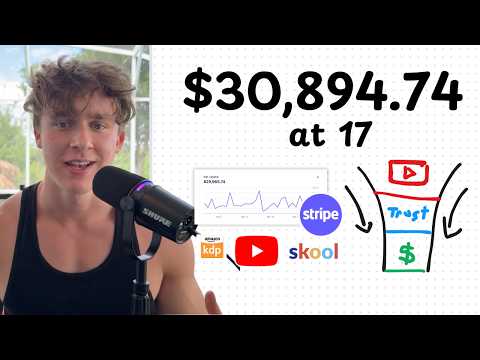
“How I made $30,894.74 last month at 17 (AI Agents)”
What we found: The $30,894 Month Is 97% One SaaS, and Profit Is Put at About Half With No Cost Listed
The four income lines add up to the title figure. The creator says it is revenue, not profit, estimates profit near 50%, and gives no cost line behind that estimate.
- $30,894 Stated month revenue
- ~97% Software share
- ~50% Stated profit
- None Costs itemised
The claim
That the creator, aged 17, brought in $30,894.74 across four online income sources in April 2026, most of it from an AI software product for self-publishers.
- Total revenue, April 2026 — $30,894
- Software product ("net volume") — Over $29,000, "$30 away, $40 away" from $30,000
- Skool community (launched last month) — A little over $400
- YouTube ad revenue — Almost $400
- Amazon KDP royalties — Over $100
- Sum of the four lines — ~$30,860 to $30,900
- Profit — "Probably around 50%"
- Implied profit at 50% — ~$15,450
- Team — One video editor, plus AI agents
- Cost lines of any kind — Not stated
What is this income idea?
A monthly income breakdown from a young founder whose main business is an AI web app for self-publishers, followed by their case for running a business mostly through AI agents.
- The creator says they are 17 and that in April 2026 they brought in a little over $30,000 across four sources. They break it down on camera, one line at a time.
- The software product, an AI tool that helps self-publishers create books, brought in "over $29,000", which they describe as "$30 away, $40 away from hitting over $30,000 in net volume". The other three lines are small: a little over $400 from a Skool community launched that month, almost $400 in YouTube ad revenue, and over $100 in Amazon KDP royalties.
- They are direct about what the number is: "this is not profit, this is revenue. I do actually have bills in my business." They estimate profit at "probably around 50% of this … maybe a little more, maybe a little bit less depending on how you calculate the numbers". No cost line is named.
- They describe the team as one human video editor plus AI agents, naming Claude, Codex and OpenClaw. An OpenClaw agent now drafts replies to customer support emails, which the creator reviews before sending: "I don't have it sending them yet because I just want to make sure my emails are perfect."
- They also give a history in three "levels": $1,000 to $5,000 a month from KDP books, side hustles and YouTube before mid-2025; the software product at about $10,000 a month from Q3 2025 to February 2026; and over $20,000 a month from March 2026. Their stated goal is $100,000 a month.
- The second half is opinion: why "agent-first" solo businesses will be the norm, a checklist for the ideal product, and why an AI business promoted by a personal brand beats selling information products. The video closes with a link to the creator's paid community.
One software product brings in nearly all of a $30,894 month; the creator puts profit at about half and does not list the costs.
- AI web app — Just under $30,000
- Skool community — A little over $400
- YouTube ads — Almost $400
- KDP royalties — Over $100
- Total revenue — $30,894
- Minus "bills" — Not itemised
- Profit — "Around 50%"
The revenue lines add up. The step from revenue to profit is an estimate.
A clean revenue breakdown, and a margin taken on trust
The lesson underneath the number
- This is a more careful income video than most. The creator breaks the total into four sources, gives each a figure, and says on camera that the headline is revenue and not profit. Rounded as they round them, the lines add up to within about $40 of the title figure. They also note the community launched only that month, and that the KDP royalties came with no new books and no ads.
- The breakdown also shows how concentrated the month is. About 97% comes from the software product. The community, the ad revenue and the royalties together are under $1,000. Read as a portfolio, this is one business with three small side lines, and its result rests on that one product holding its subscribers.
- The gap is the step from revenue to profit. "Probably around 50%" is offered as a range, not a figure, and no cost sits under it. For an AI product, the likely large lines are model usage, payment processing and affiliate commission, and the creator also pays an editor and several AI tools. At half of revenue, those costs come to about $15,000 a month. The video does not say what they are, so the margin cannot be checked.
- The second half of the video is an argument for "agent-first" businesses. What the creator describes is more modest: an agent that drafts support replies for human approval, and AI used for planning. They say they are still working towards outsourcing "around 80%" of daily tasks. That is a stated goal, and the description of the current setup is careful to say so.
This is not profit. This is revenue. I do actually have bills in my business.
The creator, before estimating profit at about half
How the business runs, as they describe it
A revenue breakdown, then a description of how the work is split between one person, one editor and AI agents.
No cost figure is given for any part of the business.
- One product carries the month — The software product brings in just under $30,000 of the $30,894. The creator calls the other three lines "a little bit smaller", which on their own figures is under $1,000 combined.
- A community launched the same month — A Skool community about AI and software businesses brought in a little over $400, mostly from "lifetime memberships". A lifetime membership is paid once, so this line does not recur in the way a subscription does.
- Two lines they call passive — Almost $400 of YouTube ad revenue and over $100 of KDP royalties, with no new books published and "zero ads" run. They describe the KDP income as "free money"; it comes from a catalogue built in earlier years, when their best KDP month was "just over $3,000".
- Support drafted by an agent — An OpenClaw agent reads support emails and puts proposed replies in the inbox. The creator still approves each one. Before this, they answered every email by hand with Claude or ChatGPT open.
- One person on the payroll — "The only real team member I have for my online business is one human video editor." Later the creator says they have "started to actively start hiring people again", and lists hiring "editors, coaches and people" as part of the next stage.
- Reducing churn — One of their four current priorities is "reducing churn" in the software product by making it "more sticky". No churn rate is given.
The business model
Monthly subscriptions to an AI web app for self-publishers, plus a Skool community, YouTube ad revenue and KDP royalties.
Self-publishers who want to create books faster with AI; for the community, people who want to build AI software businesses.
Faster book creation with AI tools in one place, from a founder who publishes on KDP themselves.
Mostly the creator’s own personal brand and content, plus affiliates and other influencers.
- AI usage — Not stated
- Payment processing — Not stated
- Video editor — Named as the one team member. Cost not stated
- Affiliates — Named as a sales source. Commission not stated
- AI agent tools — Claude, Codex, OpenClaw named. Not priced
- Skool platform — Not stated
The creator says there are bills and that profit is about half of revenue. That implies roughly $15,000 of monthly costs, none of which is itemised.
What you would actually need
Money
The creator says they have "bills" and puts profit at roughly half of revenue, but names no cost.
A 50% margin on about $30,000 implies roughly $15,000 a month in costs. For a one-person business with one editor, that is a large figure, and the video does not say what it covers. AI generation, payment processing, an editor, affiliate payouts and tools are all plausible lines; none is priced.
Costs implied, not priced
- AI model usage behind the software product
- Payment processing on every subscription
- The video editor
- Affiliate payouts (affiliates are named elsewhere as a sales source)
- Skool platform fees on the community
- Claude, Codex and OpenClaw subscriptions
- Tax, which the video does not mention
Time
About 115 days of documented work to the first $10,000 month, and "a little over 7 months" of documenting in total.
The creator also describes years of earlier work: KDP books, e-commerce, drop shipping and YouTube before mid-2025. The software product grew out of that KDP experience and is sold through their own content. The 115 days started from that base.
Where the time went
- Before mid-2025: KDP books, side hustles, YouTube at $1,000–$5,000 a month
- Q3 2025 to Feb 2026: software product to about $10,000 a month
- March 2026 onward: over $20,000 a month
- Ongoing: recording videos, product work, support review
- Goal stated: $100,000 a month
The part you must pay attention to
The revenue adds up. The profit is an estimate with no costs behind it.
The creator is clear that $30,894 is revenue. The only profit figure is "probably around 50%", and the video does not list a single cost that would support it.
- Software product, as described — ~$29,960
- Skool community — ~$400
- YouTube ads — ~$400
- KDP royalties — ~$100
~$30,860
Our sum, within rounding of the stated $30,894
The load-bearing number for anyone weighing this model is profit, and it rests on one sentence: "probably around 50% of this is profit, maybe a little more, maybe a little bit less depending on how you calculate the numbers." No cost line is named. At 50%, the business spends about $15,450 a month on something; at 40% or 60% profit, the monthly cost would be about $18,500 or $12,400. The video does not say which.
The revenue breakdown itself is consistent. The four lines, rounded as the creator rounds them, total within about $40 of the stated figure, and the software line matches the description of being "$30 away, $40 away" from $30,000. The creator also volunteers that this is revenue, not profit, which many income videos do not. What a viewer cannot get from the video is the cost side, and with it whether this is a $15,000 month, a $12,000 month or an $18,000 month for the owner.
- THE FOUR LINES (OUR SUM)
- Software ("$30-40 short") ~$29,960
- Skool community ~$400
- YouTube ads ~$400
- KDP royalties ~$100
- -------------------------------------
- Total ~$30,860
- Stated $30,894
- SHARE FROM ONE PRODUCT
- $29,960 / $30,894 = ~97%
- PROFIT AT DIFFERENT MARGINS
- 60% ~$18,500 profit ~$12,400 cost
- 50% ~$15,450 profit ~$15,450 cost
- 40% ~$12,400 profit ~$18,500 cost
- Costs named in the video: none
The economics
Four stated revenue lines, one estimated margin, no costs.
- Software product, April 2026 — Just under $30,000
- Skool community — A little over $400
- YouTube ad revenue — Almost $400
- KDP royalties — Over $100
- Stated total — $30,894
- Stated profit share — ~50%
- Earlier software revenue (Q3 2025 to Feb 2026) — ~$10,000 a month
- Monthly revenue since March 2026 — Over $20,000
- Cost lines — Not stated
Revenue to profit
$30,894 × 50% = ~$15,450 profit, leaving ~$15,450 of unnamed monthly costs
Profit of roughly $12,400 to $18,500 a month if the margin is anywhere from 40% to 60%
IncomeIdeaLab calculation from the creator’s stated total and stated profit estimate
The creator gives the margin as an approximate range and says it depends on "how you calculate the numbers". Whether tax, the creator’s own pay or one-off costs are included is not stated.
- Any individual cost line
- AI usage cost for the software product
- Payment processing and refund amounts
- Affiliate commission rates
- Subscriber count and churn rate
- What "net volume" is net of
- The software line is described as "net volume", a term used on payment dashboards. The video does not say whether it is before or after refunds or processing fees.
- The community income comes largely from lifetime memberships, which are one-off payments. That line will not repeat unless new members join.
- The KDP royalties come from books published earlier, when the creator says their best month was just over $3,000. The $100 is what that catalogue now earns with no new books and no ads.
- The creator's three-stage history (about $10,000 a month, then over $20,000 a month from March, then just under $30,000 in April from the product) describes steady growth. The figures are spoken; no subscriber or churn data is given.
- The video closes with a link to the creator's own paid community, the 10K MRR Blueprint. It is clearly presented as theirs.
Evidence status
Every substantive figure in the video.
- $30,894 in revenue in April 2026 — Creator — The four stated lines add up to it within rounding.
- Software product just under $30,000 — Creator — About 97% of the month. Described as "net volume".
- A little over $400 from the Skool community — Creator — Mostly lifetime memberships, so largely one-off.
- Almost $400 YouTube ad revenue — Creator — Plausible for a small channel. Not checkable from the video.
- Over $100 KDP royalties with no new books or ads — Creator — Earnings from an older catalogue.
- "Probably around 50%" profit — Creator — Given as an estimate with no cost lines.
- One human team member, a video editor — Creator — Later says they have started hiring again.
- First $10,000 month after about 115 days of documenting — Creator — Built on earlier years of KDP and YouTube work.
- Over $20,000 a month since March 2026 — Creator — Consistent with the April figure.
- Goal of $100,000 a month — Creator — A goal. No timeline is given.
- 80% of daily tasks outsourced to agents and hires — Creator — Described as the target for the current stage, not yet reached.
What is actually proven?
The revenue lines are consistent with each other. Profit is an estimate.
- The four income lines add up to the stated total within about $40.
- About 97% of the month comes from one software product.
- The creator says the total is revenue, not profit.
- A support agent drafts replies that the creator approves by hand.
- Profit of about 50% is an estimate with no stated costs.
- Subscriber count, churn and what any cost line is.
What the headline doesn’t tell you
The headline is accurate as revenue. Most of the context is in what it is made of.
- It is revenue. — The creator says so.
- Profit is an estimate. — "Probably around 50%."
- No cost is named. — About $15,000 a month implied.
- One product is 97%. — The rest is under $1,000.
- The community is new. — Mostly one-off lifetime fees.
- KDP is an old catalogue. — Best month was over $3,000.
- Churn is a priority. — No rate is given.
- There is a pitch. — For the creator’s own community.
Should you try it?
A useful income breakdown, not a starting template
Take the habit of separating revenue from profit. Do not take the 50% margin as a benchmark: the costs behind it are not stated.
- Consistency of revenue figures — 8 — Four lines add up to the stated total.
- Revenue vs profit clarity — 7 — Says plainly the figure is revenue.
- Cost disclosure — 1 — Bills mentioned; none named or priced.
- Evidence for the revenue — 4 — Figures are spoken; no subscriber count or churn.
- Diversification — 2 — 97% from one product.
- Conflict disclosure — 7 — The community pitched is clearly the creator’s own.
- Beginner replicability — 3 — Built on years of KDP and an existing audience.
- The useful part of this video is the format. A creator who splits a month into sources, says which ones are new or one-off, and states up front that the total is revenue gives viewers more to work with than a single headline figure. If you track your own income, do it the same way.
- The part not to copy is the margin. "Probably around 50%" is a guess with no costs beneath it. For an AI software product, model usage, payment fees and affiliate commission can move the margin a long way in either direction. If you are planning a similar product, price those lines yourself before assuming half of revenue is yours.
- Also look at where the business started. The software product came out of the creator's own KDP publishing, and its customers come mostly from their personal brand and content. The first $10,000 month came after about 115 days of documenting, on top of earlier years of books, side hustles and YouTube. A beginner without that audience would be starting further back.
- Finally, note the concentration. Nearly the whole month depends on one product. The creator names reducing churn as a current priority, which is the right focus, but no churn figure is given, so there is no way to judge how steady the $30,000 is.
Passive or automated?
Automation
Billing and delivery are automated; support drafts are reviewed by hand.
Passive potential
The two "passive" lines total about $500; the main product needs ongoing content and work.
The creator calls the YouTube ad revenue and KDP royalties passive, and on their own description that is fair: no new books and no ads in April. Together they are about $500. The software product, which is almost all of the month, depends on the creator's content for sales, on product work to reduce churn, and on support email that an agent drafts and the creator approves. They describe the "agent-first" setup as still in progress.
- Recording videos, the main source of customers
- Approving every support reply the agent drafts
- Product work to reduce churn
- Managing the video editor and new hires
- Running the Skool community
Recommended beginner experiment
Use the breakdown method; price the costs yourself.
- List every income line separately. — Mark which are recurring and which are one-off.
- Write down every cost before estimating margin. — AI usage, payment fees, contractors, tools.
- Track churn from the first month. — The creator names it as a priority.
- Start from a problem you have. — Their product came from their own KDP work.
- Let an agent draft, and review it yourself. — As the creator does with support email.
- Watch concentration. — One product at 97% is a single point of failure.
Our verdict: 6/10
A breakdown that adds up, with the profit left as an estimate and almost all of it from one product
Credited for splitting the month into four named sources that add up to the stated total; for saying on camera that the figure is revenue and not profit; for noting the community launched that month and the KDP income needed no new books or ads; and for describing the support agent accurately as a drafting tool under human review. Marked down because the 50% profit estimate comes with no cost lines on a product with AI usage, payment and affiliate costs; because no subscriber count or churn rate is given for the product that is about 97% of the month; and because the starting advantages of an earlier KDP catalogue and an existing audience are mentioned but not weighed.
The title figure is accurate as the creator presents it. Software revenue just short of $30,000, a little over $400 from a new community, almost $400 of ad revenue and over $100 of royalties add up to within about $40 of $30,894, and the creator says clearly that this is revenue, not profit. That is more than many income videos offer. What the video does not provide is the cost side. Profit is put at "probably around 50%", which on these figures means about $15,000 a month of costs, and none of those costs is named. The month is also almost entirely one product, with no subscriber or churn figures to show how stable it is. Read it as an honest revenue report for one AI software business, not as evidence of what that business earns its owner.
- Stated revenue, April 2026 — $30,894
- Our sum of the four lines — ~$30,860
- Software share — ~97%
- Stated profit — ~50%
- Implied monthly costs — ~$15,450
- Cost lines named — None
- Beginner suitability — Method yes, numbers no
Sources
- How I made USD 30,894.74 last month at 17 (AI Agents) — Zach Sells AI — YouTube video, 2026-05-08