YouTube / Multiple Income Streams · Claim Review
“My 12 Sources of Income at Age 30”
What we found: 12 Income Sources at 30: Two of the Twelve Streams Get a Figure, and the YouTube One Describes a Best Streak, Not an Average
Ten streams were at zero fifteen months earlier, by the creator's account. YouTube ads can reach over $1,000 a day "on an exceptional streak", and a first sponsorship paid $5,000 to $10,000. No total, monthly average or cost is given.
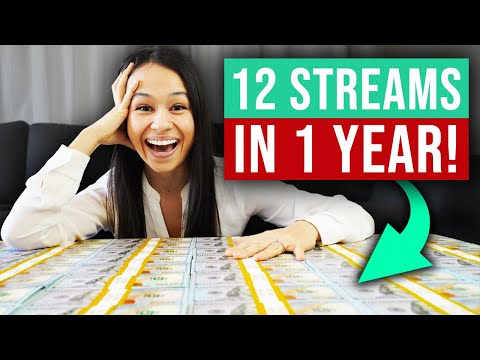
- 12 Income streams
- >$1,000/day YouTube ads, best streak
- $5k–$10k First sponsorship
- Not stated Total income
The claim
That the creator built twelve income streams by age 30, ten of them from zero in about fifteen months, and that several now run largely on autopilot.
- Income streams — 12
- Streams at $0 in January of the previous year — 10 of 12
- YouTube ad revenue — "On an exceptional streak… over a thousand dollars a day"
- YouTube revenue share — 55% to the creator, 45% to YouTube
- First sponsored video — More than $5,000, less than $10,000
- Sponsorship offers — A couple a week; most turned down
- Law school — $200,000
- Total income, monthly figures, costs — Not stated
What is this income idea?
Build several income streams around one audience and one skill set, so that no single stream stopping can stop your income.
- The creator is a former corporate lawyer who left a law firm job. Her argument is about risk: a salary is active income that stops the day you leave, and "you're putting all of your eggs into one basket". She says that in January of the previous year, ten of her twelve streams "were at zero dollars".
- The twelve streams are: YouTube ad revenue, affiliate marketing, sponsorships, a digital product, a productized service, an online course, legal practice, dividends, white labelling, rental income, speaking engagements, and angel investing with some equity-for-help deals.
- Several are linked. The digital product (website legal templates) and the productized service (a trademark registration package with a team handling the paperwork) are both part of her legal tech company. The course teaches how she grew on YouTube and got sponsorships. Her legal practice now mostly represents YouTubers negotiating sponsorship deals, startups, and some trademark work.
- Two streams are given figures. YouTube ad revenue "on an exceptional streak can mean that I'm making over a thousand dollars a day", and her first sponsored video paid "more than five thousand dollars but less than ten thousand dollars". She says contracts stop her giving exact sponsorship numbers.
- She is clear about risk and effort. Angel investing is "extremely high risk" and "the money could just go to zero"; she pre-sold her course for a month before making it to test demand; and she says the hardest part is how long "you can work without seeing results".
A lawyer-turned-YouTuber lists twelve income streams and explains each well, but gives a figure for only two, so how much they add up to is not known.
- Build an audience — YouTube, personal finance
- Monetise the audience — Ads, affiliates, sponsors
- Package a skill — Templates, trademark service
- Teach the method — A pre-sold course
- Keep select legal work — Hourly, most turned down
- Invest the surplus — Dividends, rental, angel
Twelve streams that mostly grow from one audience and one profession.
Twelve streams describe a structure, not an income.
The lesson underneath the number
- The case for several income streams is made well here. A salary stops when the job does; a mix of products, services, content and investments is harder to stop all at once. She is also right that the useful streams are the ones that need little upkeep once built, because they free time to build the next. Her digital product, with checkout and delivery automated, is a clean example.
- What the video does not give is scale. Two streams have figures. YouTube ad revenue can exceed $1,000 a day "on an exceptional streak", which is a description of her best days rather than her normal ones. Her first sponsorship paid between $5,000 and $10,000, and she says contracts prevent her giving exact figures for others. The remaining ten streams, including the legal products, the course, speaking and her hourly practice, are described but not sized. A viewer cannot tell which streams matter and which are small.
- The streams are also less independent than the count suggests. Ads, affiliates, sponsorships and the course all depend on the YouTube channel. The digital product, the trademark service and the legal practice all depend on a law degree that she says cost $200,000. The two that existed before, dividends and rental income, depend on capital. That is a sensible portfolio for someone with her background. It is not a set of twelve things a viewer could start from scratch.
- Her honesty is worth crediting. She says she cannot give exact sponsorship figures because of contracts and gives a range instead, calls angel investing extremely high risk, explains that she turns down most sponsorships and most legal work, and describes pre-selling her course before building it. The advice is careful. The income it produces is simply not stated.
It's about how hard you can work without seeing results.
The creator, on building multiple streams
The streams, as the creator describes them
Grouped by how they make money.
Income figures are given for YouTube ads and the first sponsorship only; no stream has a cost figure.
- YouTube ad revenue — Available after 1,000 subscribers and 4,000 watch hours, she says, with 55% of ad money going to the creator. At zero a year earlier; over $1,000 a day on its best streaks.
- Affiliate marketing and sponsorships — Referral links to products she uses, and paid mentions of about 45 seconds. She gets a couple of sponsorship offers a week and turns most down: "I only have one reputation." Her first sponsored video paid $5,000 to $10,000.
- A digital product — A pack of website legal templates sold through her legal tech company, with checkout and delivery automated. Upkeep is "the occasional customer service inquiry" and keeping templates current.
- A productized service — A fixed trademark registration package. The customer supplies details and a signature; a team she built handles the rest, "so that I can take myself out of the equation".
- An online course — On growing a YouTube channel and getting sponsorships. Pre-sold for about a month before it was made, to check there was demand.
- Legal practice — Hourly work, now limited to representing large YouTubers in sponsorship negotiations, startups she believes in, and some trademark matters. She turns down most requests because the work is "not scalable and it's not passive".
- Investing and other streams — Dividends and rental income (the two that predate the period), white labelling of a product, paid speaking, and angel investing, which she calls "extremely high risk".
The business model
YouTube ads, affiliate commissions, sponsorships, template and trademark-service sales, a course, hourly legal fees, speaking fees, white-label royalties, dividends, rent and potential angel exits.
A personal finance audience on YouTube, small business owners needing legal documents and trademarks, and YouTubers negotiating sponsorships.
Legal services made cheaper and simpler than hiring a lawyer, plus personal finance and YouTube know-how.
Her YouTube channel, which feeds the affiliate, sponsorship, course and legal product streams; press coverage of the course.
- Law school — $200,000, stated
- Trademark service team — Cost not stated
- Checkout software — Price not stated
- Video production — Not mentioned
- Angel investments — Example sizes only; her amounts not stated
Apart from law school, no cost is given, and no stream has a profit figure.
What you would actually need
Money
No start-up costs are given. She mentions checkout software she calls her best business purchase of the year, and $200,000 spent on law school.
Several streams depend on assets most viewers do not have: a law degree for the legal product, service and practice; capital for rental property and angel investing; and an audience large enough to attract sponsors.
What the streams rest on
- A law degree, stated at $200,000
- Checkout and delivery software, price not stated
- A team for the trademark service, cost not stated
- A rental property, existing before the period
- Capital for angel investments
- A personal finance audience on YouTube
Time
Ten streams built in about fifteen months, with time freed as each one goes onto autopilot.
The fifteen months follow years of legal training and practice, which several streams draw on directly. The time spent on the channel, the course and the team is not stated.
What still takes her time
- Making YouTube videos
- Choosing and vetting sponsors
- Customer service and template updates
- Running the trademark service team
- Selected hourly legal work
- Speaking engagements
The part you must pay attention to
The YouTube figure is a best streak, and it is one of only two figures in the video.
She says YouTube ad revenue went from zero to a point where "on an exceptional streak it can mean that I'm making over a thousand dollars a day". The only other income figure is her first sponsored video, between $5,000 and $10,000.
- YouTube ads, best streak — >$1,000/day
- First sponsored video — $5k–$10k
- No figure given — 10 other streams
Not calculable
No total, average or cost
The load-bearing assumption a viewer might make is that twelve streams means a large total income. The video does not say. A best streak of over $1,000 a day cannot be turned into an annual figure, because it is described as exceptional rather than typical; annualising it would give $365,000, which the creator does not claim. The first sponsorship is a single payment for a single video, and she says contracts stop her giving exact figures for later ones. For the other ten streams, including the legal products, the course and speaking, no amount is given at all, and some, like angel investing, may not have paid out yet.
That does not undermine the video's actual point, which is about structure rather than size: several streams protect you if one stops, and streams that need little upkeep free time to build the next. She explains that well, and her caveats are sensible. But "twelve sources of income" describes how many, not how much, and a viewer comparing their own situation has nothing to compare against. It is also worth seeing how many streams draw on the same two assets, a YouTube audience and a law degree. If the channel's reach fell, ads, affiliates, sponsorships, the course and probably the legal products would fall together.
- FIGURES GIVEN
- YouTube ads >$1,000/day
- "on an exceptional streak"
- 1st sponsor $5,000-$10,000
- Law school $200,000 (a cost)
- WHY NOT TO ANNUALISE
- $1,000 x 365 = $365,000
- -> a best streak, not
- claimed as typical
- STREAMS WITH NO FIGURE
- affiliate, digital product,
- trademark service, course,
- legal practice, dividends,
- white label, rental,
- speaking, angel investing
- = 10 of 12
The economics
Two income figures, one cost, and no total.
- Income streams — 12
- New in ~15 months — 10
- YouTube ads, best streak — Over $1,000 a day
- Creator share of ad revenue — 55%
- First sponsored video — $5,000–$10,000
- Law school — $200,000
- Total income — Not stated
- Costs by stream — Not stated
What the ad share implies
$1,000 a day to the creator ÷ 55% = ~$1,820 a day paid by advertisers on those days
On her best days, advertisers paid roughly $1,800 for ads on her videos, of which about $1,000 reached her
IncomeIdeaLab calculation from the two figures stated in the video
This applies only to the "exceptional streak" she describes. No typical daily or monthly ad figure is given.
- Total annual or monthly income
- Income from each of ten streams
- Typical, rather than best, YouTube ad revenue
- The cost of the trademark service team
- Software and production costs
- Returns, if any, on angel investments
- The YouTube threshold and revenue share she gives (1,000 subscribers, 4,000 watch hours, 55% to the creator) are stated as how the programme works at the time of the video.
- The Webull referral she describes gives the new user free stocks and gives her one free stock per sign-up. She says this on camera, and it is the example she uses to explain affiliate marketing.
- "A couple offers a week" for sponsorships, most of which she declines, suggests sponsorships could be a large stream. Without a figure for later deals, the size is not known.
- Angel investing is described with example cheque sizes of $10,000 or $100,000, not her own amounts, and a five-to-seven-year horizon. It may not have produced any income yet.
Evidence status
Every substantive figure in the video.
- 12 income streams — Creator — Each is described. We could not check them from the video.
- 10 of 12 were at $0 in January of the previous year — Creator — Rental and dividends are the two that predate it.
- Over $1,000 a day from YouTube ads — Creator — "On an exceptional streak". A best case, not an average.
- YouTube pays creators 55% of ad revenue — Creator — Stated as the programme's split at the time.
- First sponsored video paid $5,000–$10,000 — Creator — A range, given because of contract terms.
- A couple of sponsorship offers a week — Creator — Most declined, she says.
- Law school cost $200,000 — Creator — The one large cost given.
- Course pre-sold for about a month — Creator — Credited: demand tested before building.
- Digital products are "pretty much as passive as you can get" — Creator — She lists the upkeep: support and template updates.
- Income from the other ten streams — Nobody — Not stated in the video.
What is actually proven?
The streams are clearly described. Their size is not given.
- Twelve streams are named and explained.
- YouTube ad revenue can exceed $1,000 a day on her best streaks.
- Her first sponsorship paid between $5,000 and $10,000.
- She states the limits: contract confidentiality, high-risk investments, slow results.
- On best days, about $1,800 of advertiser spend produces about $1,000 for her.
- Total income, typical monthly income, and costs.
What the headline doesn’t tell you
The title counts the streams. The video does not size them.
- Two streams have figures. — Ten do not.
- $1,000 a day is a best streak. — Her own words.
- One sponsorship is priced. — The first, as a range.
- Law school cost $200,000. — Three streams rely on it.
- Four streams need the channel. — Ads, affiliates, sponsors, course.
- Two streams predate the period. — Rental and dividends.
- Angel investing may not pay. — "Could just go to zero."
- There is a team. — For the trademark service.
Should you try it?
A sound principle, built on assets most viewers do not have
Take the idea of adding low-upkeep streams one at a time around a skill you have. Do not read twelve streams as a size of income.
- Clarity of explanation — 8 — Each stream is defined with an example.
- Income disclosure — 2 — Two figures, one of them a peak.
- Cost disclosure — 2 — Law school only.
- Candour about risk and limits — 8 — Confidentiality, risk and slow results stated.
- Independence of the streams — 3 — Most rest on one channel or one degree.
- Beginner accessibility — 5 — Some streams need a law degree or capital.
- The principle is sound: do not rely on one source of income, and favour streams that keep paying after the work is done. The best way to apply it is the way she describes doing it, one stream at a time, around something you already know. Her course is a good model: she pre-sold it for a month before making it, so she knew people wanted it.
- Several of her streams will not transfer. The legal templates, the trademark service and the legal practice all depend on being a lawyer. Rental income and angel investing depend on capital. Sponsorships at the level she describes depend on a sizeable personal finance audience. A viewer without those should look at the shape of her portfolio, not the specific streams.
- Be careful with the one large figure. Over $1,000 a day from YouTube ads is what she earns "on an exceptional streak". It is not a typical day, and the video gives no typical figure. YouTube ad income varies with views, topic and season, and personal finance is a topic advertisers pay more for, as she notes.
- Finally, count dependencies as well as streams. If four or five of your streams all rely on the same audience, they are closer to one stream with several payment methods. Diversification protects you only when the sources can fail separately.
Passive or automated?
Automation
Checkout, delivery and ad payments run themselves.
Passive potential
Dividends, rent and templates are close; the rest need her or a team.
Some of her streams are genuinely low-effort once built. Dividends and rent need little work, and the template product has automated checkout and delivery, with upkeep limited to occasional support and keeping documents current. The trademark service is systematised and run by a team, which takes her out of the work but adds people to manage. The rest are active. YouTube ads, affiliates, sponsorships and the course all depend on her continuing to make videos; legal practice and speaking are paid by the hour or the event. She is clear about this distinction, and calls her legal practice active income that she deliberately limits.
- Making YouTube videos
- Vetting and delivering sponsorships
- Running the trademark service team
- Hourly legal work
- Preparing for and giving talks
Recommended beginner experiment
Add one stream, and measure it.
- List the skills you could package. — Hers came from law.
- Pick one low-upkeep product. — Templates, a guide, a checklist.
- Pre-sell before you build. — She did, for a month.
- Automate checkout and delivery. — As she describes.
- Record income and costs monthly. — The video gives neither.
- Use typical figures, not best days. — Her $1,000 is a streak.
- Check how streams depend on each other. — One audience is one risk.
- Only then add the next stream. — One at a time.
Our verdict: 5/10
A clear case for many streams, with income figures for two and the YouTube figure describes a best streak
Credited for explaining twelve income streams clearly with examples, for testing demand by pre-selling the course, for giving a sponsorship range and explaining that contracts prevent exact figures, for stating that angel investing could go to zero, and for being clear about which streams are active and which are passive. Marked down because only two streams are given any income figure, because the larger of those, over $1,000 a day from YouTube ads, describes an exceptional streak rather than a typical day, and because no total income, monthly figure or cost (apart from law school) is given, so the size and profitability of the twelve streams cannot be worked out.
This video makes a sensible argument well. A single salary is a single point of failure; streams that keep paying after the work is done free up time to build more; and you should test demand before building a product. The creator explains each of her twelve streams clearly, and she is careful about risk, describing angel investing as extremely high risk and the hardest part of the process as working without seeing results. What the video does not give is scale. Two of the twelve streams have figures: YouTube ads can exceed $1,000 a day "on an exceptional streak", and her first sponsored video paid between $5,000 and $10,000, with later figures withheld under contract. The other ten, including her legal products, course, practice and speaking, are not sized, and no total, monthly income or cost is given apart from the $200,000 she spent on law school. Several streams also rest on the same two assets, her channel and her law degree. Read the video as a well-explained map of how a lawyer with a personal finance audience built a portfolio of income, not as evidence of how large that income is.
- Income streams — 12
- New in ~15 months — 10
- YouTube ads — >$1,000/day, best streak
- First sponsorship — $5,000–$10,000
- Law school — $200,000
- Total income — Not stated
- Beginner suitability — The principle, not the streams
Sources
- My 12 Sources of Income at Age 30 — Erika Kullberg — YouTube video, 2021-04-27
- FTC — Guides Concerning the Use of Endorsements and Testimonials — Regulatory guidance on sponsorships, affiliate links and earnings claims